Joint Notation Grammar — Draft Review
Layer 2, Pass 1. Hand-drafted visual grammar for compound (shape × shape)
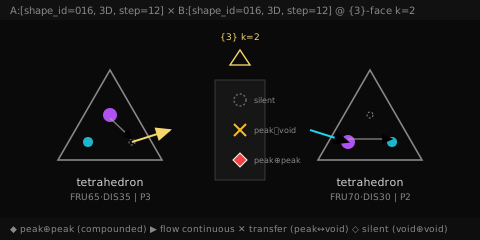
notation. These three SVGs use the same pair of shapes
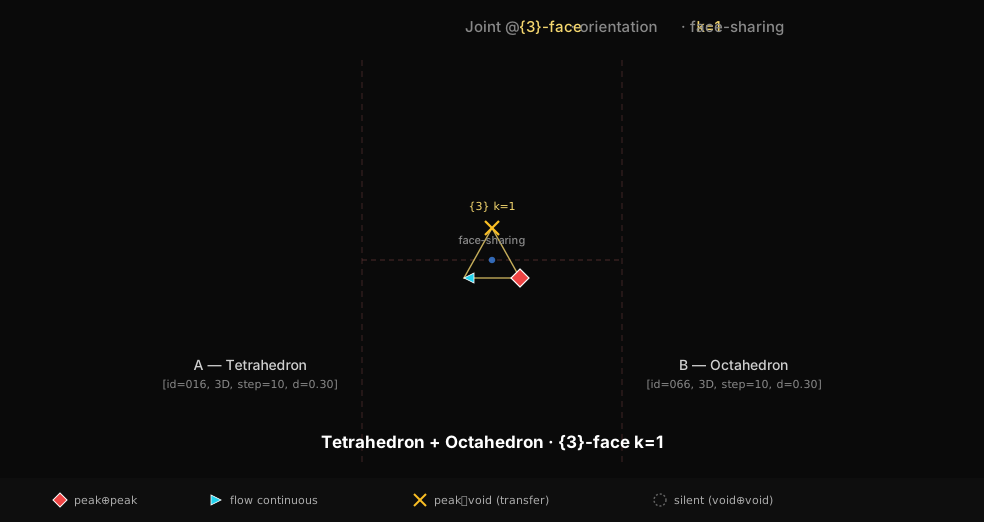
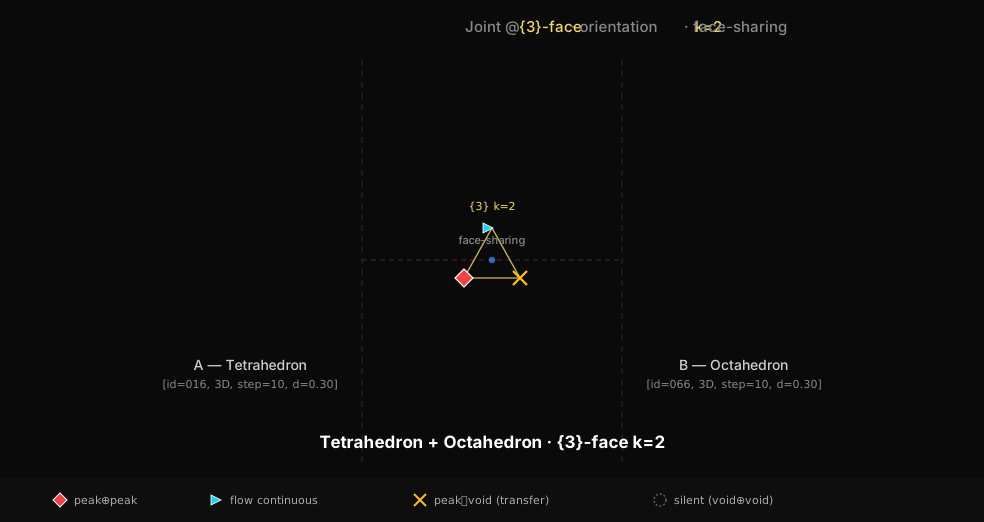
(tetrahedron × tetrahedron at {3}-face) at three discrete
orientations k=0, 1, 2. Each orientation produces a different
alignment of internal markers at the joint vertices, and is therefore
a distinct entry in the catalogue.
{3}-fold). The marks
inside the band read what happens at each vertex of the shared
polygon when the two cavities meet at that orientation.
Interface mark vocabulary
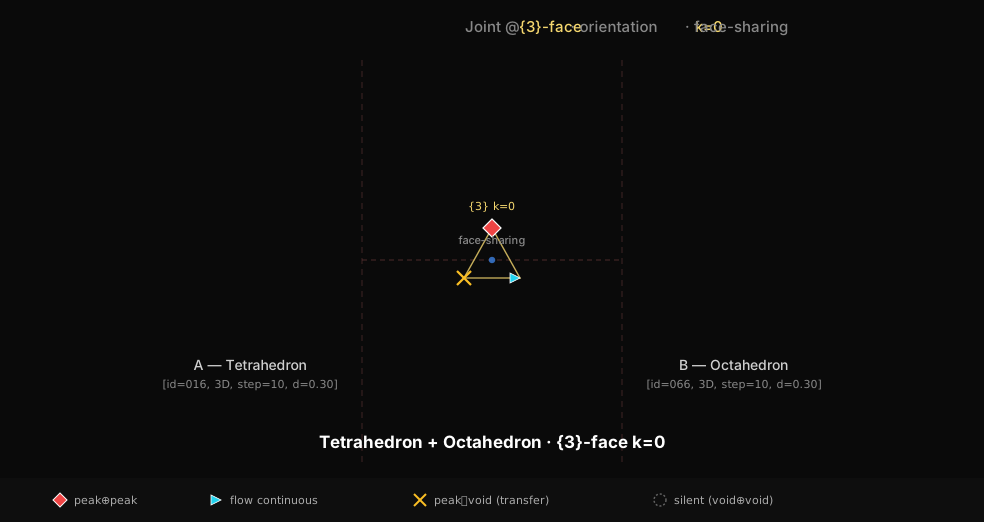
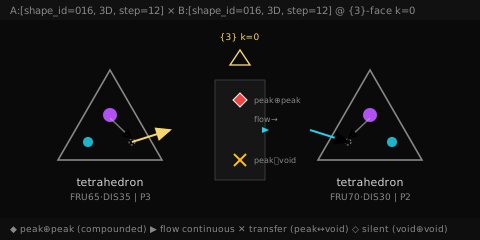
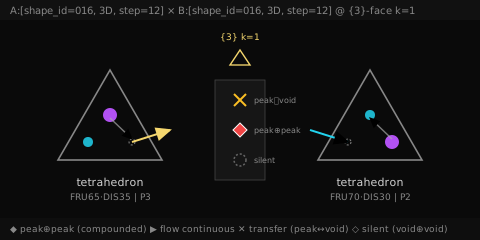
- ◆ filled diamond — peak meets peak. Compounded concentration at this interface vertex.
- ▶ gradient arrow through band — propagation arrow on A continues through the joint into B. Information flows across.
- ✕ yellow X — peak meets void. Transfer: energy moves from one cavity into the other through this point.
- ◇ dashed open circle — void meets void. Silent interface. No information crosses here.
Twist / chirality continuity (↺ / ↻) is reserved for joints
whose monomers carry rotational propagation; not shown in these
orientations because both monomers' arrows are linear, not rotational.
v3 — Combined-body style (current)
Two shapes drawn as a single combined diagram, joined at the shared face. The shared face appears as a vertical dotted line down the center. The internal markers from each shape's atlas notation are kept on their respective halves, so the compound reads as one continuous body. A single interface symbol sits on the join line — one mark per orientation, indicating what happens at the connection (peak⊕peak, peak⤳void, flow continuous, or silent).
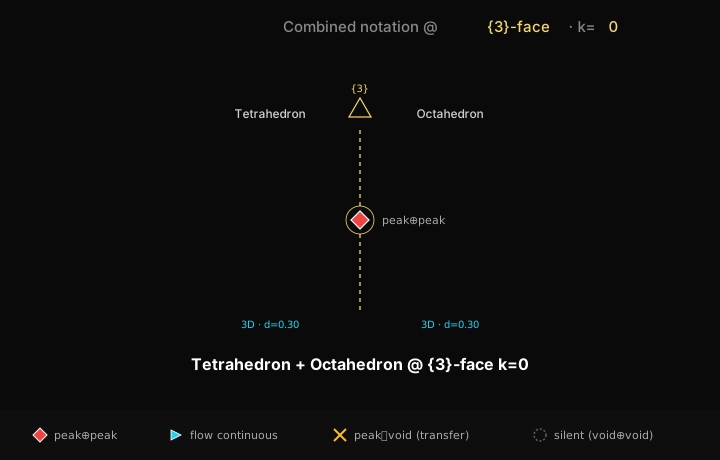
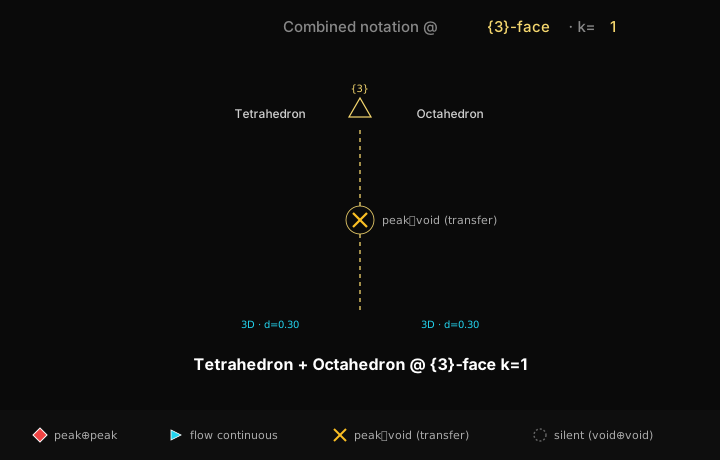
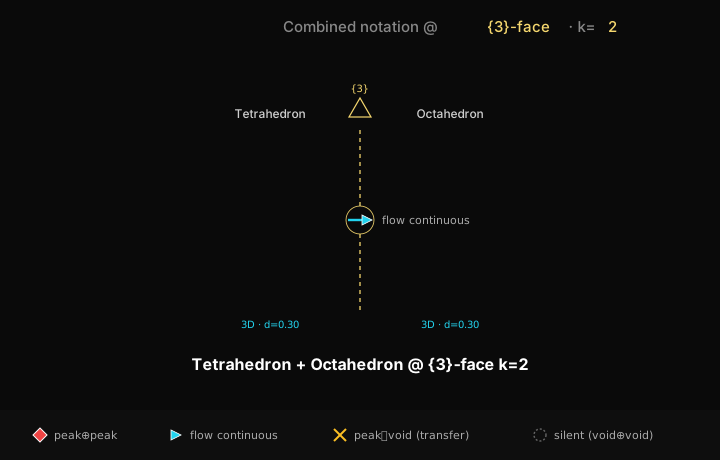
v2 — Side-by-side style (deprecated)
This second draft matches the style of the existing pair schematics (e.g. spinel, perovskite, fullerene). Each shape is rendered as its own circuit-language notation symbol from the atlas, side-by-side, with the connection point in the center carrying the {n}-fold symmetry silhouette and the four interface marks at its vertices. Three orientations of the same pair shown — same monomers, same decoherence step, but the marks rotate around the shared face.
v1 (deprecated) — symbolic-cavity style
Earlier draft, kept for reference. Used abstract triangle outlines rather than the actual notation symbols.
v1 Orientation k=0
v1 Orientation k=1
v1 Orientation k=2
What you're reviewing
- Does the visual read at a glance? Can you tell what's happening at the joint without reading the captions?
- Are the four interface marks distinguishable enough to scan?
- Is the interface band's symmetry-silhouette useful, or noise?
- Should the bottom address strip be more or less prominent?
- Do you want orientation labels (
k=0,1,2) more visually distinct between rotations?
Tell me what to adjust before we generate this notation at scale across the handshake matrix.